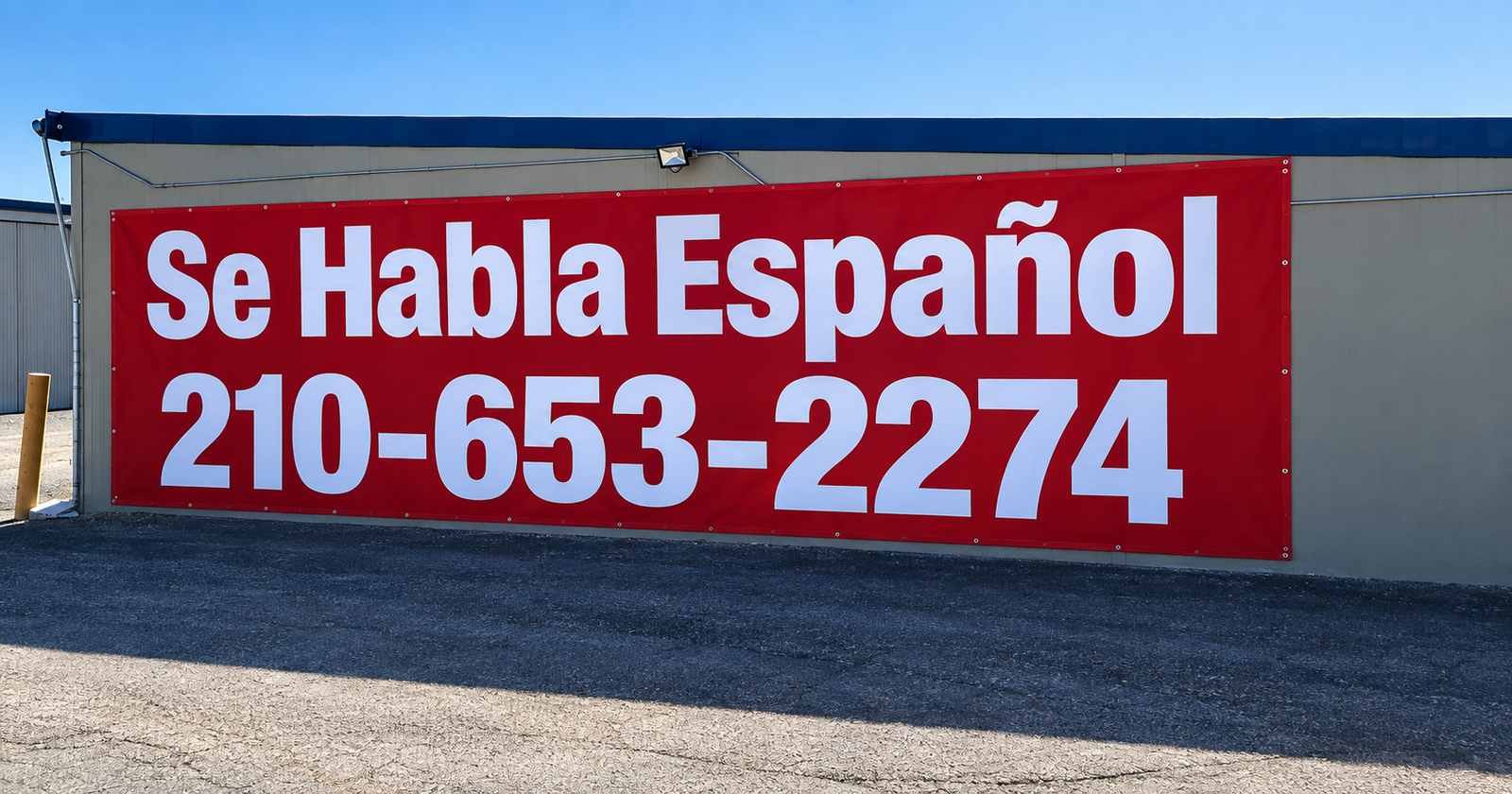
There is a meaningful difference between a standard vinyl banner and a heavy-duty outdoor vinyl banner, and it is not always visible until the installation has been up for a while. The right specification depends on a combination of factors: banner size, duration, placement, wind exposure, and the specific outdoor conditions the banner will face. Getting that combination right at the order stage is significantly less costly than replacing a banner that was under-specified for its application.
What Makes a Vinyl Banner Heavy-Duty
Standard vinyl banners are typically produced at 13 ounces per square yard, which is the industry baseline for most outdoor applications including grand openings, seasonal promotions, and event signage. Heavy-duty vinyl banners are generally produced at 15 to 18 ounces, with 18oz being the specification most commonly used for extended outdoor installations in demanding conditions.
It is worth noting that weight alone does not determine banner strength. The density of the reinforcing scrim layer, measured in denier, is equally important. A higher denier count means a tighter weave and greater resistance to tearing at mounting points. When evaluating heavy-duty options, both substrate weight and scrim specification matter.
The practical differences that heavier substrate and higher denier construction tend to provide in demanding outdoor conditions:
- Tear resistance at mounting points: denser scrim construction resists the edge tearing that develops at grommets under repeated wind stress.
- Color retention under UV exposure: thicker material paired with UV-resistant inks can help maintain color quality over longer installation periods, particularly in direct sun.
- Surface stability under heat: heavier vinyl tends to be more resistant to the rippling and stretching that lighter material can develop under sustained high temperatures.
- Wind performance: denser material under proper tension moves less in wind, which reduces stress on mounting hardware and grommet points.
The Factors That Should Drive the Specification Decision
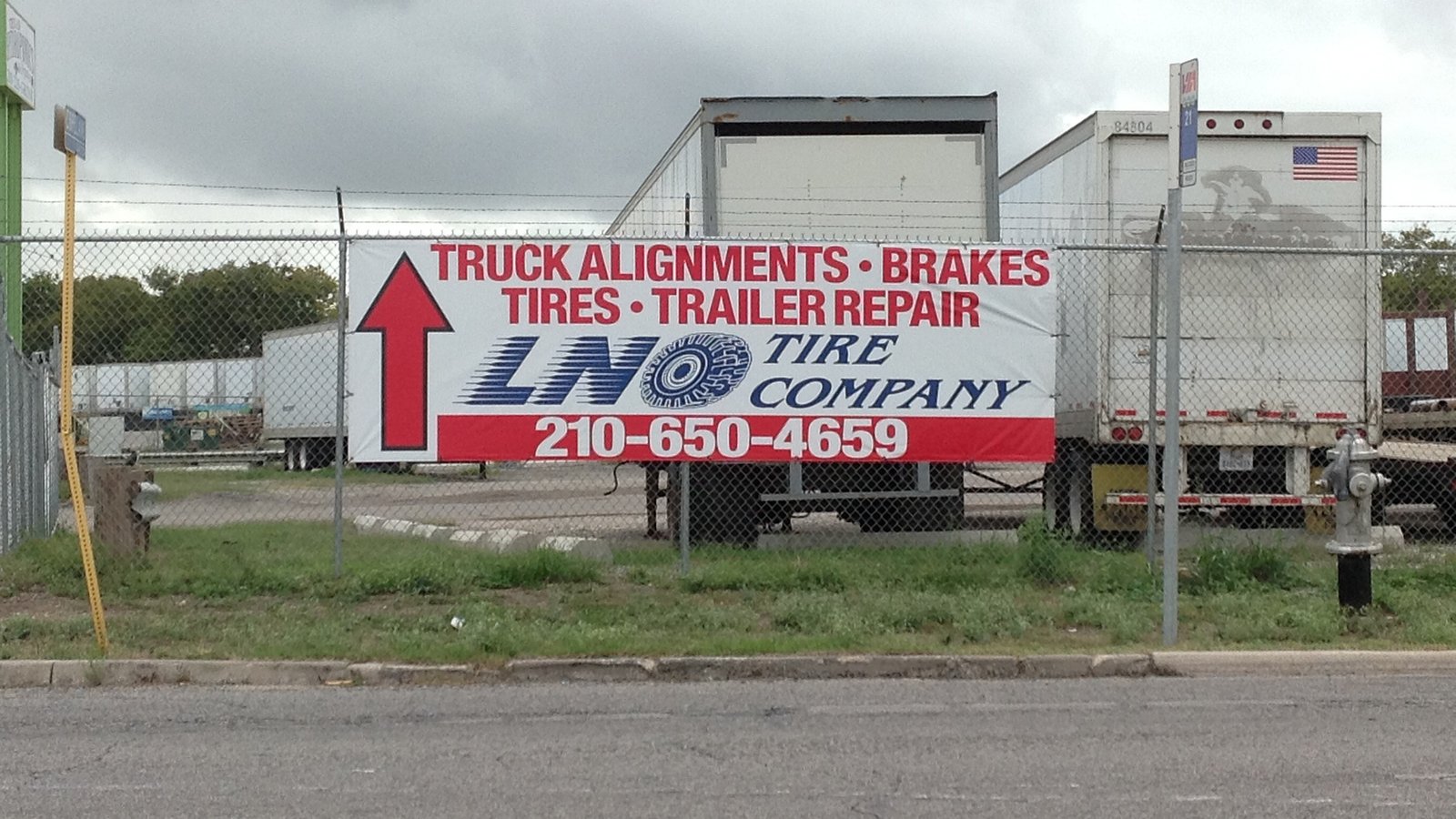
Rather than applying a fixed rule based on duration alone, the decision to specify heavy-duty material is better made by considering these variables together:
Banner size
Larger banners carry more surface area for wind to act on, which increases the load on mounting points and the material itself. A large banner on an exposed installation benefits from heavier substrate and closer grommet spacing regardless of duration. A smaller banner in the same location may perform adequately on standard material.
Placement and wind exposure
A banner mounted on a fence line along a busy San Antonio arterial road, on a building facade above street level, or on an open commercial lot near Loop 1604 faces meaningfully different wind conditions than one in a sheltered courtyard or interior corridor. Exposed placements warrant heavier specification. Sheltered placements may not.
Duration and outdoor conditions
The longer a banner will be in place, and the more demanding the conditions, the stronger the case for heavy-duty material. San Antonio’s sustained UV exposure and summer heat can accelerate the wear on lighter materials. For installations expected to run for an extended period under direct sun or in high-wind areas, upgrading the specification is worth considering. For short-term campaigns in moderate conditions, standard material often performs adequately.
The Three Main Formats and When Each Applies
Standard vinyl (13oz): The industry baseline for most outdoor banner applications. Suitable for short to medium-term installations in moderate conditions, grand openings, seasonal campaigns, and event signage. Performs well when the installation is not exposed to sustained high wind or extended direct sun.
Heavy-duty vinyl (15-18oz): Appropriate for larger banners, extended outdoor installations, high-wind locations, building-mounted applications, and any context where the banner will be under sustained environmental stress. The 18oz specification at high denier is the standard recommendation for long-term outdoor use in demanding conditions.
Mesh vinyl: A perforated material designed for high-wind environments where a solid banner would act as a sail. Commonly used for fence wraps, elevated building banners, and outdoor installations where wind loading is the primary concern. The perforations reduce wind resistance at the cost of some print opacity and visual density. Mesh is the right choice when the installation context makes wind management more important than graphic solidity.
Print Quality and Longevity Under San Antonio Conditions

The material specification addresses structural performance. The ink and overlaminate specification addresses how the banner looks over its installation period.
San Antonio’s UV index reaches very high levels during summer months, and direct sun exposure on south and west-facing installations can accelerate ink fading on banners produced without UV-resistant inks or laminate protection. The rate at which this occurs depends on the quality of the ink system, the laminate specification, and the specific conditions of the installation. For any banner intended to represent a brand accurately for an extended period, UV-resistant inks and an appropriate overlaminate are worth specifying alongside the substrate weight.
At Signs of San Antonio, we advise on the full specification, substrate weight, scrim density, ink system, and laminate, based on where the banner is going and how long it needs to perform. A banner for a covered walkway at the Pearl and a banner for an exposed fence line near the Medical Center corridor are different specifications, and treating them the same way tends to produce a result that works adequately for one application and underperforms in the other.
The Specification Conversation Worth Having Before the Order
The most useful thing a business can do before ordering an outdoor vinyl banner is provide the production context rather than just the artwork. Placement direction, expected duration, mounting method, and the general wind and sun exposure of the location are the details that allow the specification to be matched to the application.